Forest Stewardship, Part 1: Why We Manage Forests
Jefferson Land Trust
|
When talking with the community about our approach to caring for the land, there’s one area in particular that stimulates a great deal of discussion and debate: forest management.
For some, the idea of cutting down trees on a nature preserve — for any reason — feels out of step with the goals of conservation. It’s a common and understandable instinct: let the forest take care of itself.
And in many cases, that’s true. Forests are dynamic systems. Left alone, they grow, compete, adapt, and change over time.
But here’s the complication: most of the forests we see today aren’t starting from a “natural” baseline.
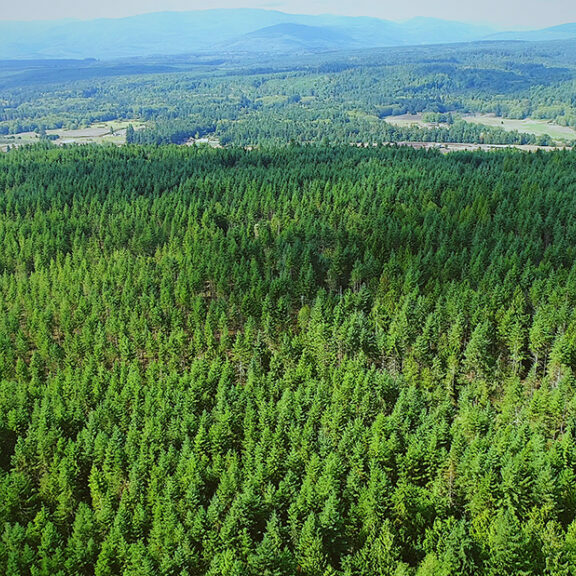
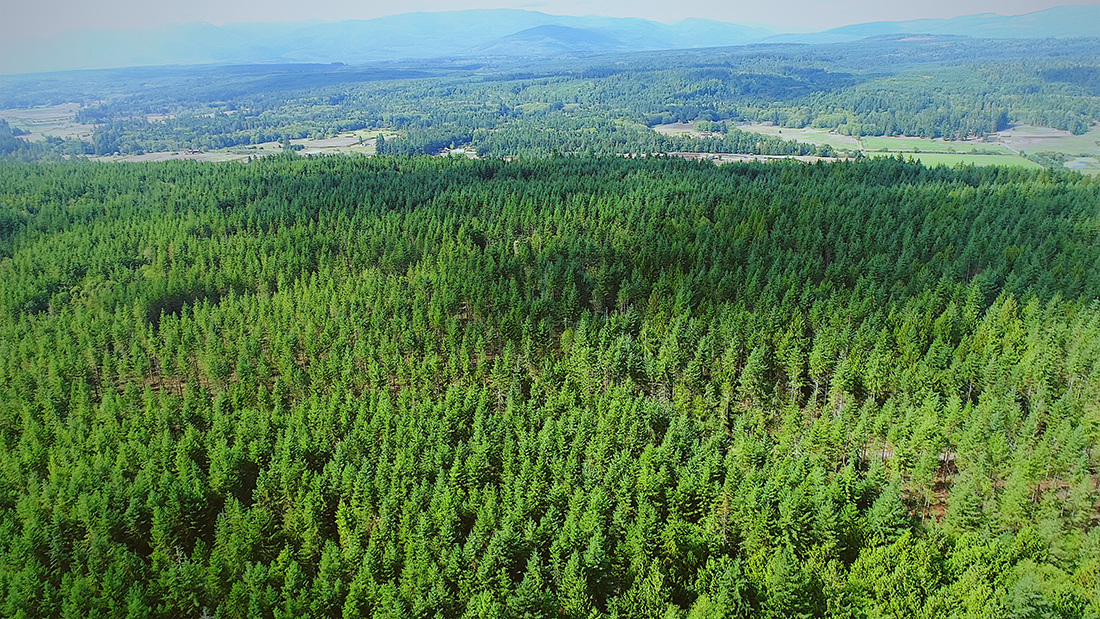
Across the Olympic Peninsula, generations of large-scale industrial management have shaped our forests in ways that wouldn’t have occurred naturally. Wide swaths were cleared all at once and replanted with a single species.
Under more natural conditions, disturbances tend to be smaller and more varied. A windstorm, for example, could open up a small patch of forest, or a lightning strike might create a gap in the canopy. A giant fir will eventually age and fall.
What would originally have been small, patchy openings became large, uniform stands — same age, same species, competing for the same resources. The forest will still take care of itself in those conditions, but not necessarily in a way that leads to long-term health.
When too many trees are growing in the same place, they reach for the same limited supply of water, light, and nutrients. That competition can weaken an entire stand, making all of the trees more vulnerable to drought and disease. The forest will thin itself eventually — but the process is slow, and under today’s conditions, can mean more widespread loss than would have occurred historically.
The plain truth is that the world around these forests has changed.
“We’re not living in historic conditions anymore, and forests are responding to pressures they didn’t evolve with — from climate change to human use. The land has been touched in ways that have shifted its trajectory. Still functioning, but not always in a way that leads to long-term health or resilience.”
– Carrie Clendaniel
Climate patterns are shifting. New diseases and invasive species are present. And human activity continues to influence how forests grow and regenerate.
These forests are doing what they can to thrive, but they’re doing it under very different conditions than the ones they evolved in.
That’s where stewardship comes in.
Forest management, as we see it, isn’t about controlling nature or forcing a particular outcome. It’s about helping guide forests toward a more diverse, resilient condition — one that can better withstand change and support wildlife, clean water, and healthy soils over time.
Sometimes that means thinning trees to reduce competition. Sometimes it means planting native species where natural regeneration is struggling. Often, it’s both.
A Bit About the Term “Forest Resilience”…
When we talk about resilience in relation to forests, we mean the combination of two specific things: a forest’s ability to withstand disturbance, and its ability to recover when change does happen.
The goal isn’t perfection, or a return to what once was. It’s about trajectory — moving in alignment with changing conditions.
“In many ways, this work is about hedging our bets,” says Carrie Clendaniel, the Land Trust’s Preserve Manager. “It’s about creating forests that have the diversity and flexibility to adapt to conditions we can’t fully predict.”
With each forest we steward, we’re asking: given what this land has been through, and what we know about the pressures ahead, how can we help set it on a path toward long-term health?
In the next part of this series, we’ll take a closer look at what that work actually looks like on the ground — and why it can sometimes be surprising.